
Emotional Support
Being told you have sight loss that cannot be treated is often difficult to come to terms with. Some people go through a process similar to bereavement, experiencing a range of emotions including shock, anger, and denial, before eventually coming to accept their condition.
The mental health problems that can arise from sight loss are too often side-lined, leaving people to cope with depression and anxiety on their own. Sight loss can have a significant emotional and psychological impact on people’s lives, with fear, isolation, loss of self-esteem and depression often resulting from loss of employment and the economic impact this may have.
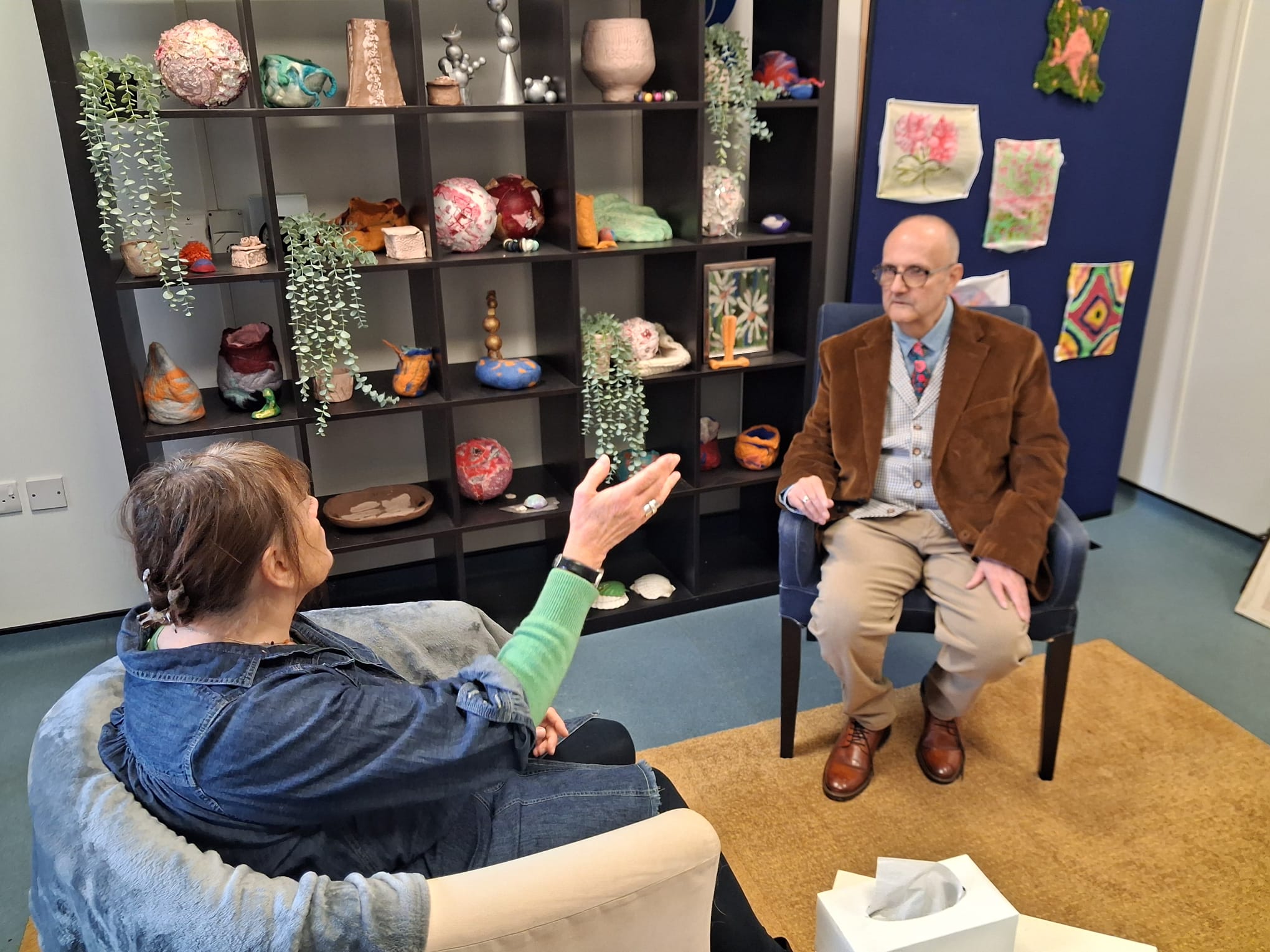
The earlier the emotional impact is addressed and support offered, the earlier an individual will be able to adapt to a life with sight loss. ECLOs are trained to provide initial emotional support at the hospital before referring on to local counselling and talking therapy services or specialist sight loss counselling services through national charities:
Local counselling services:
Harmless: www.harmless.org.uk
Wellness in Mind: www.wellnessinmind.org
Insight: www.nottinghamshireinsight.org.uk/themes/mental-health
RNIB offers emotional support for people with sight loss through their telephone and online counsellors. Link here: Sight loss counselling | RNIB
The Macular Society also provides a remote emotional support service with professionally trained counsellors. Click here for details: Counselling service – Macular Society
My Sight Notts also provide a course called Shared Vision, in which a facilitated group of 8 to 10 people explore the practical and emotional impact of sight loss and learn how to adapt to their lifelong condition. Various people with lived experience of sight loss sit in on this group and share their experiences. Click here for details: Shared Vision | My Sight Notts